|
||
      |

• Section 1.1 Square Roots with Perfect Squares
• Section 1.2 Square Roots with Non Perfect Square
• Section 1.2b The Pythagorean Theorem
• Section 1.3 Surface Areas of 3D Solids
• Section 1.4 Surface Areas of Irregular 3D Solids
• 1.1
• 1.2
• 1.2b
• 1.3
• 1.4
• 1.1
• 1.2
• 1.2b
• 1.3
• 1.4
• Rev.
Surface Area and Square Roots
In this section, students will learn to:
• Display an understanding of square roots
• Create images by rotation 2D solids about a vertex
• Determine the surface area of composite 3D solids to solve problems
• Click here for homework

• Section 2.1 What are Exponents?
• Section 2.2 Zero and Negative Exponents
• Section 2.3 Exponents and Order of Operations
• Section 2.4 Exponent Rules
• 2.1
• 2.2
• 2.3
• 2.4
In this section, students will learn to:
• to display an understanding of powers with integral bases by representing repeated multiplication using powers and any power with an exponent of zero is equal to one
• to perform operations on powers with integral bases and whole number exponents
• Click here for homework
• Section 3.1 What are Rational Numbers?
• Section 3.2 Adding Rational Numbers
• Section 3.3 Subtracting Rational Numbers
• Section 3.4 Multiplying Rational Numbers
• Section 3.5 Dividing Rational Numbers
• Section 3.6 Combined Operations with Rational Numbers
• 3.1
• 3.2
• 3.3
• 3.4
• 3.5
• 3.6
• 3.1
• 3.2
• 3.3
• 3.4
• 3.5
• 3.6
• Rev.
Rational Numbers
In this chapter, students will learn:
• Compare rational numbers with different values
• Add and subtract rational numbers
• Multiply and Divide rational numbers algebraically and pictorally
• Solve problems involving rational numbers
• Click here for homework
• Section 4.1 Graphing Lines with T.O.V.
• Section 4.2 Linear Relations
• Section 4.3 Drawing Lines with Intercepts
• Applet for Linear Relations
• Section 4.4 Equations and Graphs
• Section 4.5 Estimating Graphs
• 4.1
• 4.2
• 4.3
• 4.4
• 4.5
• 4.1
• 4.2
• 4.3
• 4.4
• 4.5
• Rev.
In this chapter, students will learn:
• to write and describe equations with linear patterns
• to draw and graph linear equations
• Click here for homework
• Section 5.1 What are Polynomials?
• Section 5.2 Combining Liketerms
• Section 5.3 Adding and Subtracting Polynomials
• Section 5.4 Adding and Subtracting Polynomials Part 2
• Section 5.5 Multiplying & Dividing Polynomials by a Constant (Distribution Rules)
• Section 5.6 Multiplying & Dividing Polynomials
• Ch5 Review Polynomials
• 5.1
• 5.2
• 5.3
• 5.4
• 5.5
• 5.6
• 5.1
• 5.2
• 5.3
• 5.4
• 5.5
• 5.6
• Ch5R
In this chapter, students will learn:
• to display an understanding of polynomials
• perform operations of simplifying polynomial expressions by combining liketerms
• Click here for homework

• Section 6.1 Solving Basic Equations
• Section 6.2 Solving Equations by Using Scales
• Section 6.3 Solving Word Problems Using Algebra
• Section 6.4 Linear Inequalities
• Section 6.5 Solving Linear Inequalities
• Section 6.6 Solving Linear Inequalities (Part 2)
• Ch 6 Review
• 6.1
• 6.2
• 6.3
• 6.4
• 6.5
• 6.1
• 6.2
• 6.3
• 6.4
• 6.5
• Rev.
In this chapter, students will learn:
• to generalize patterns from a problem solving context using linear equations
• to extrapolate and interpolate data from linear graphs to solve problems
• Click here for homework
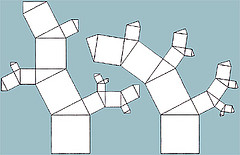
• Section 7.1 and 7.2 Scaled Diagrams and Scaled Factors
• Section 7.3 Similar Polygons
• Section 7.4 Similar Triangles
• Section 7.5 Reflections and Line Symmetry
• Section 7.6 Rotations and Symmetry
• Section 7.7 Finding Symmetrical Patterns
• 7.1 and 7.2
• 7.2
• 7.3
• 7.4
• 7.5
• 7.6
• 7.7
• 7.1 & 7.2
• 7.2
• 7.3
• 7.4
• 7.5
• 7.6
• 7.7
• Rev.
In this chapter, students will learn:
• to display an understanding of scaled diagrams
• Calculate sides of similar shapes and triangles
• Click here for homework
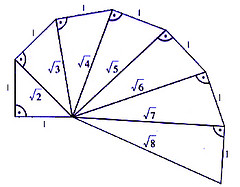
• Section 8a Properties of Parallel and Perpendicular Lines
• Section 8.1 Tangents and Circles
• Section 8.2 Chord Properties
• Components of a Circle
• Section 8.3 Angle Properties in a Circle (Part 1)
• Section 8.3b Angle Properties in a Circle (Part 2)
• Section 8.4 Solving Problems with Circle Properties
• 8.1
• 8.2
• 8.3
• 8.3b
• 8.4
• 8a
• 8.1
• 8.2
• 8.3
• 8.3b
• 8.4
• Rev.
In this chapter, students will learn:
• to solve problems and justify the solution strategy using circle properties
• to explore certain circle properties involving angles,
chords, and tangent lines
• Click here for homework
• Section 9.1 Dealing with Probability
• Section 9.2 Problems with Sampling
• Section 9.3 Samples and Populations
• Section 9.4 Sampling Methods
• 9.1
• 9.2
• 9.3
• 9.4
Notes
• 9.1
• 9.2
• 9.3
• 9.4
• Rev.
In this chapter, students will learn:
• to develop a project plan that involves collecting, displaying , and analysing data
• to select a sample from a population
• to understand the various aspects of collecting data
• Click here for homework
